
Gynaecomastia Surgery in Melbourne
Understanding Your Options
Gynaecomastia is very common, but many men put off seeking help because it feels embarrassing to talk about. It describes excess fibrofatty tissue on the male chest, sometimes with excess skin, giving the chest a more rounded appearance.
Dr Richard Ross, Specialist Plastic and Reconstructive Surgeon, treats gynaecomastia in Melbourne. He takes a sensitive and practical approach. Being open and understanding helps men feel more comfortable discussing a difficult topic, and more comfortable with their bodies.
Common Reasons Patients Consider Gynaecomastia Surgery
- Excess fibrofatty tissue on the chest
- Excess chest skin
- Feeling self-conscious about the shape of the chest
A consultation is the right step to understand which of these apply to you, and whether surgery is likely to help.
What the Gynaecomastia Procedure Involves
Where treatment is needed, surgery is the most common option. This may be direct excision of the tissue, or excision combined with liposuction to refine the contour. Occasionally, excess skin also needs to be removed.
Direct Excision
Removes excess tissue through an incision along the lower border of the areola.
Excision With Liposuction
Adds liposuction to blend the chest contour with the surrounding area.
Skin Removal
Occasionally, excess skin also needs to be removed.
Each option suits different needs. Dr Richard will explain which he recommends for you, and why.
Preparing for Gynaecomastia Surgery
As part of a routine history and examination, Dr Richard will work out the most likely cause of your gynaecomastia. Hormone tests or imaging may be needed. If a hormonal cause is found, you may be referred to an endocrinologist (hormone specialist).
Preoperative photos will be taken, and a surgical plan discussed to address all aspects of your chest contour.
Considering if Gynaecomastia Surgery is for You?
Choosing gynaecomastia surgery is a very personal decision. It's worth considering whether the potential benefits match your aims, and whether the risks are acceptable to you.
Gynaecomastia surgery may suit you if excess chest tissue affects your comfort or confidence, and any underlying cause has been assessed. Realistic expectations about what surgery can and can't offer are important.
Dr Richard will talk with you about your reasons, examine you and explain whether surgery is likely to help.
During Surgery
Gynaecomastia surgery is most often performed under general anaesthetic. A surgical drain may be needed, and is usually removed in the first day or so. A compression garment is fitted before you wake. Every operation follows the plan you and Dr Richard agree on beforehand.
Recovery
Depending on your circumstances, you may go home the same day or stay overnight.
Key points during recovery
- Wear your compression garment at all times, except when showering, for about two weeks
- Drains, if used, are usually removed in the first day or so
- Wait one month before upper body gym work
After the excess tissue is removed, the chest skin tightens to a variable degree. Reaching the final contour may take a few months or more.
Dr Richard and our experienced nursing team will let you know when your follow-up appointments are and what to expect at each stage of your recovery.
Risks and Considerations
All surgery carries risks. The decision to have gynaecomastia surgery should be made after weighing whether the potential benefits meet your aims and whether the risks are acceptable to you. Risks include, but are not limited to, the following.
- Heart problems, including heart attack or irregular heartbeat
- Blood clots in the legs or lungs, which may be fatal
- Infection at the surgical site
- Bleeding or fluid collection needing a return to theatre
- Wound breakdown, delayed healing or protruding stitches
- Visible, raised or stretched scars
- Dissatisfaction with chest skin tightening or chest definition
- Altered nipple sensation, including increased sensitivity
- Asymmetry, or a sunken or inverted nipple and areola
- Loss of the nipple or surrounding tissue
- The possible need for revision surgery
Dr Richard will only consider revision surgery if there's a clear structural problem that can realistically be improved, and the risk of a worse result is minimal.
You're welcome to ask Dr Richard anything at your consultation, so you can make a decision that feels right for you.
Results vary from person to person. Any surgical or invasive procedure carries risks. Before proceeding, you should seek a second opinion from an appropriately qualified health practitioner.
Before & After Gallery
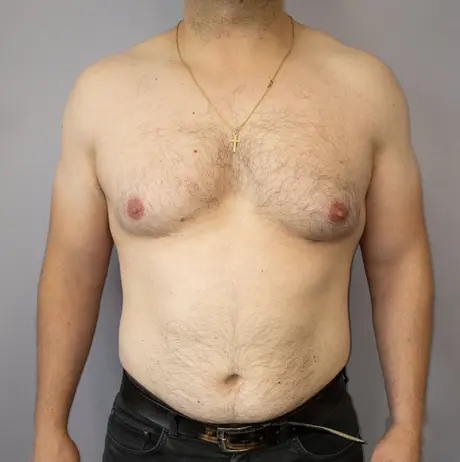
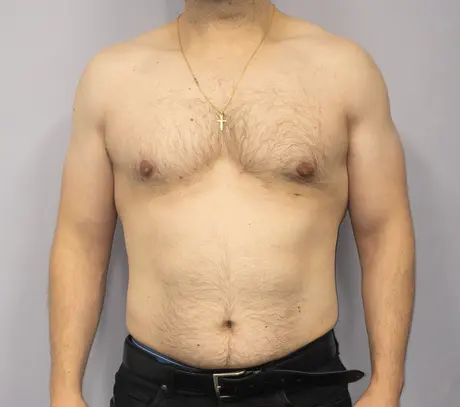
Bilateral excision of gynaecomastia tissue and contouring liposuction
Results vary from person to person. Any surgical or invasive procedure carries risks. Before proceeding, you should seek a second opinion from an appropriately qualified health practitioner.

Let’s Begin with What Matters to You
You don't need to have it all figured out. Tell us what's on your mind, and we'll help you take the next step at your own pace.
Frequently Asked Questions
Gynaecomastia is excess fibrofatty tissue on the male chest, sometimes with excess skin. It's very common, though many men feel hesitant to talk about it. Dr Richard Ross treats gynaecomastia in Melbourne and will talk you through your options at a private consultation.
The cause varies between men. Dr Richard will work out the most likely cause through a routine history and examination, and hormone tests or imaging may be needed. If a hormonal cause is found, you may be referred to an endocrinologist.
Gynaecomastia is most often treated with surgery, either direct excision or excision combined with liposuction. Occasionally, excess skin also needs to be removed. Dr Richard will explain which approach he recommends for you, and why.
You may go home the same day or stay overnight. You'll wear a compression garment for about two weeks and wait one month before upper body gym work. Dr Richard and our experienced nursing team will guide you through each stage.
The incision is usually along the lower border of the areola. If skin is removed, there may be additional scars. Dr Richard will show you where your incisions are likely to sit.
The chest skin tightens to a variable degree after the excess tissue is removed, and it may take a few months or more to reach the final contour. Dr Richard will talk this through with you, so you know what to expect.
Yes. Gynaecomastia is very common, although many men feel hesitant to talk about it. Dr Richard takes a sensitive, practical approach, so you can discuss your concerns openly at a private consultation.